Are Hermes Oasis Sandals good for wide feet?
Short answer: they can work for some wide-footed wearers, but they are not a universal solution. The Oasis is a molded, low-stretch slide and its fit depends on your exact forefoot width, toe splay and whether you prefer a snug or roomy slide.
The Oasis is built as a contoured, molded slide rather than a soft leather strap sandal, so it doesn’t “give” the way leather does. People with slightly wider-than-average feet often find success by choosing the Oasis and adjusting sizing; people with full, very wide feet or pronounced bunions may feel pressure across the forefoot. The footbed has raised edges and a cupped heel that locks the foot in place — good for stability but bad if you need horizontal room. Because the upper and footbed are one piece of molded material, the only reliable remedies are sizing changes or choosing a differently shaped slide. Read on for practical measurement steps, a sizing strategy and tested alternatives for very wide feet.
Oasis vs Oran and other Hermes styles: fit comparison
The Oasis fits differently from the Oran and leather sandals: it’s more molded, thicker and less forgiving. That means width behaves differently on your foot.
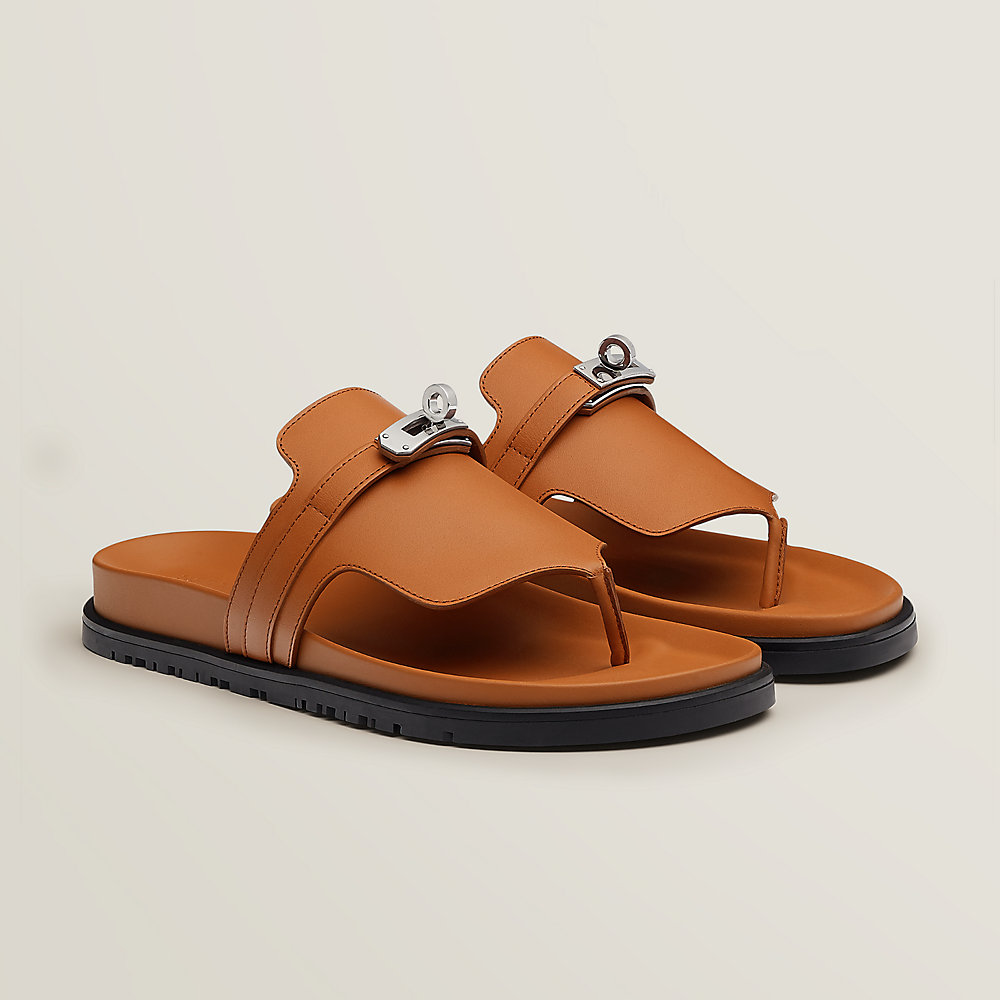
Hermes Oran is a leather T-strap sandal with adjustable shaping over time; the Oran tends to shape to the foot and can feel more comfortable for a true wide foot once broken in. The Oasis is a single-piece molded slide with a fixed upper and footbed contour, so if the forefoot hits the sides of the strap or the footbed, there’s no “softening” to create more room. Compared to generic athletic slides, Oasis has a deeper cupped heel and a more pronounced arch, which stabilizes but reduces lateral movement that might otherwise accommodate a broad forefoot. If you like roomy, stretchy straps, leather sandals or neoprene slides will usually be friendlier than the Oasis.
What measurements determine whether these sandals will work for you?
Measure both length and ball-width and compare those numbers to a size chart — width is the deciding factor for Oasis. If your ball-width oransandals.com/product-category/women-shoes/oasis-sandals/ is above the typical range for your EU size, expect a snug fit across the forefoot on the Oasis.
To measure: stand barefoot on a piece of paper, mark the longest toe and the rearmost heel, then measure length; mark the two widest points across the ball of your foot and measure that distance for width. Repeat both feet and use the larger measurement. Translate length to your Hermes/EU size using an accurate chart; then use the ball-width to determine if that size will allow toe splay inside the mold. If your ball-width measurement is higher than the average for that size, plan to size up. Also note arch height: the molded footbed can lift the medial arch and change perceived tightness across the forefoot. Take photos or keep measurements for returns — many fit mistakes come from guessing without a ruler.
Sizing strategy: Should you size up, down or stick to your usual size?
General advice: if your feet are marginally wide, try your usual size; if they’re clearly wide, size up half to a full EU size. Avoid sizing down for width issues — Oasis does not compress laterally.
For most wearers the Oasis runs true to length but tight across the forefoot for wide shapes; sizing up relieves forefoot pressure but can introduce heel slip if you prefer a snug lock. If unsure, size up half-size and use a thin insole or heel tab to reduce heel lift. Don’t expect break-in to increase horizontal room: the material is molded EVA/rubber-like and won’t stretch like leather. If your toes hit the front edge of the footbed when standing and spread wider while walking, sizing up is the safer choice. Keep one clear foot-width measurement handy so you can compare to other brands when shopping online.
Materials and construction: why width feels different
The Oasis is molded from a closed-cell EVA or rubber-like composite and built as a single-piece footbed and upper; that construction limits lateral stretch and concentrates pressure points. That explains why some wide-footed people feel pinching at the strap or along the toe box.
Molded materials provide water resistance, durability and consistent shape, but they don’t adapt to foot shape the way leather or textile straps do. The contoured footbed is designed to cradle the heel and support the arch; when your heel sits low in the cup, the forefoot is pushed forward into the strap area, which magnifies any width restriction. Because you can’t re-stitch or reshape molded EVA, fit must be solved with size selection, orthotic inserts or choosing an alternate style. Cleaning is easy — mild soap and water — but resoling or reshaping isn’t practical, so make fit decisions carefully before committing to a purchase.
How to test the fit in-store or at home?
Always test standing and walking: if the strap digs when you walk, or toes hit the front edge while your foot naturally splay, the Oasis is too tight. A quick standing/walking test will reveal most width problems.
In-store, stand barefoot, place your foot fully back into the heel cup and walk several steps on tile or carpet. Check for pressure across the widest part of the forefoot and for lateral or medial rubbing near bunions. Try the same size and one half-size up to evaluate heel slip versus forefoot comfort. At home, repeat the measurement process, then order two sizes if the retailer has a generous return policy; test on different surfaces. If you plan to wear the Oasis with orthotics, bring thin insoles to the fitting because thick insoles reduce room further. Photograph the pressure points if you plan to request assistance from a fitter or to justify an exchange later.
Care, break-in and small mods that help wide feet
Because the Oasis is molded, “break-in” is more about wearing tolerance than material stretching; careful wear and small mods are the most reliable ways to improve comfort for wide feet. Heat-stretch methods used on leather won’t work here.
Allow a few short wear sessions before long days, so you can spot pressure areas early. If you size up and experience heel slip, add a thin adhesive heel pad to stabilize the heel without compromising forefoot width. For minor pressure across bunions, a silicone toe ring or a small, thin gel pad placed under the strap can reduce friction. Avoid attempting to heat or mechanically stretch the molded unit — you risk warping the footbed and destroying the intended arch support. Cleaning with mild soap and air drying keeps the material flexible and hygienic; do not leave Oasis in extreme heat (car dashboards, direct sun for hours) because prolonged high heat can warp the EVA structure.
Expert tip: \”Measure your ball-width and compare it to the size you plan to buy — do not rely on ‘it’ll stretch’. Oasis is molded EVA and will not widen with wear; ordering without width data is the most common mistake.\”
Little-known facts: The Oasis’s molded footbed usually has a deeper heel cup than many mass-market slides, which increases stability but can change how width feels; the material’s closed-cell construction makes it quick-drying and ideal for wet conditions; because the upper and footbed are one piece, resoling or traditional shoe repair isn’t possible; Hermes has released the Oasis in seasonal limited colors that sometimes affect resale patterns.
| Style | Typical Fit Across Forefoot | Best for Wide Feet? | Sizing Tip |
|---|---|---|---|
| Hermes Oasis | Contoured, low-stretch; can feel snug at ball-width | Sometimes — narrow to mildly wide feet work best | Size up 0.5–1 EU if your ball-width is above average |
| Hermes Oran | Leather strap that softens; more adaptable | Better for true wide feet | Usually true to size; leather breaks in |
| Generic neoprene slide | Stretchy upper, forgiving | Good for wide feet | Stick to usual size unless unlined |
Alternatives to Hermes Oasis if your feet are very wide
If you have consistently wide measurements or sensitive bunions, choose an alternative: leather sandals with adjustable straps, wide-specific brands, or roomy sport slides will almost always be more comfortable than the Oasis.
Look for adjustable buckles, soft leather that will mold to your foot, or slides advertised in wide (W) fittings. Brands that offer anatomical, roomier lasts and removable footbeds allow you to insert custom orthotics without cramping the forefoot. If you want the Hermes aesthetic, the Oran in soft leather is a closer match for wide feet; otherwise, consider high-end sport slides with a wider toe box and stretchy uppers for immediate comfort. Trying on multiple brands and keeping your width measurement handy makes the comparison objective instead of speculative.
Final verdict for wide-foot shoppers
Hermes Oasis can work for people with mildly wide feet who are willing to size strategically and accept the molded fit; they are not ideal for very wide feet or for anyone who needs horizontal stretch from the upper. The key is measurement, realistic expectations about material behavior and testing both standing and walking.
If you measure and find your ball-width exceeds the typical range for your Hermes size, plan to size up and test for heel slip; if sizing up is unacceptable, select an adjustable leather or wide-specific slide instead. Because Oasis is molded and not stretchable, avoid the common mistake of buying your usual size expecting it to adapt. Use your ruler, compare ball-width to size charts, and pick the path — size adjustment, small comfort mods or a different style — that matches your foot shape and comfort tolerance.